

Our last month (September) back in Greece:
We said farewell to lovely interesting Turkey for the 2023 season at the port of Datca and headed off at 4.30am on our 8 hour trip across to the Greek Island of Kalymnos in the Dodecanese group.
Kalymnos is a very steep barren island with only 18% of the land area able to be cultivated so the main occupations are fishing, boat building and most importantly the oldest occupation – sponge diving, which flourished up until the 1970’s when synthetic substitutes were developed and the sponge processing industry went into decline. The local Maritime Museum was a fascinating place to spend an afternoon learning about the development of this industry through the ages. Today there are only a handful of sponge divers making a living from this trade in Kalymnos. .
Sponge diving is considered the oldest form of free-diving, having its origins in Ancient Greece with both Homer and Plato mentioning the use of sponges as a bathing aids. Apart from bathing, sponges were used for painting, decorating, padding (for example inside the helmets of Legionnaires), filtering water, applying ceramic glazes and paints, contraception, and in medicine as soporific sponges, commonly used from the 9th to the 14th centuries AD for the administration of anaesthesia by soaking the sponge in narcotics which vapours were then inhaled to anaesthetise a patient for surgery!
Prior to modern diving suits and SCUBA, freediving was the way sponges were harvested. Divers, usually naked, carried a 15 kilograms skandalopetra – a rounded stone tied on a rope to the boat, to take him down to the bottom quickly. The diver then ran along the sea bed cutting sponges loose from the bottom and collecting them in a net bag. Depth and bottom time depended on the diver’s lung capacity. They often went down about 30 metres for up to 5 minutes. The advent of modern diving suits brought death (from the lack of understanding of nitrogen narcosis – the bends) and destruction of the sponge habitat through over fishing.
Surprising to me was that (1) sponges are in fact animals (Phylum Porifera) and (2) when harvested from the sea floor (they have roots to anchor them) sponges have a black outer skin which is removed in the processing stage to give us the light brown or honey coloured sponge we are used to seeing.
Weather forced us to move northwards from Kalymnos to Leros to wait out the next Meltemi for 6 days and celebrate John’s birthday. The harbour at Lakki is one of the best sheltered places to be waiting out weather and while here (this was our 3rd visit over the years) we still found new things to do – this included hiring a motor scooter for the day and touring the island, visiting the War tunnels and celebrating John’s birthday.
Asking for directions to the fruit and vegetable market in Lakki from a very helpful, very Greek assistant: “you go out and turn right and go until you reach the round square. You feet will be about 10 minutes”. The town square actually has a roundabout in the middle so these instructions make perfect sense!


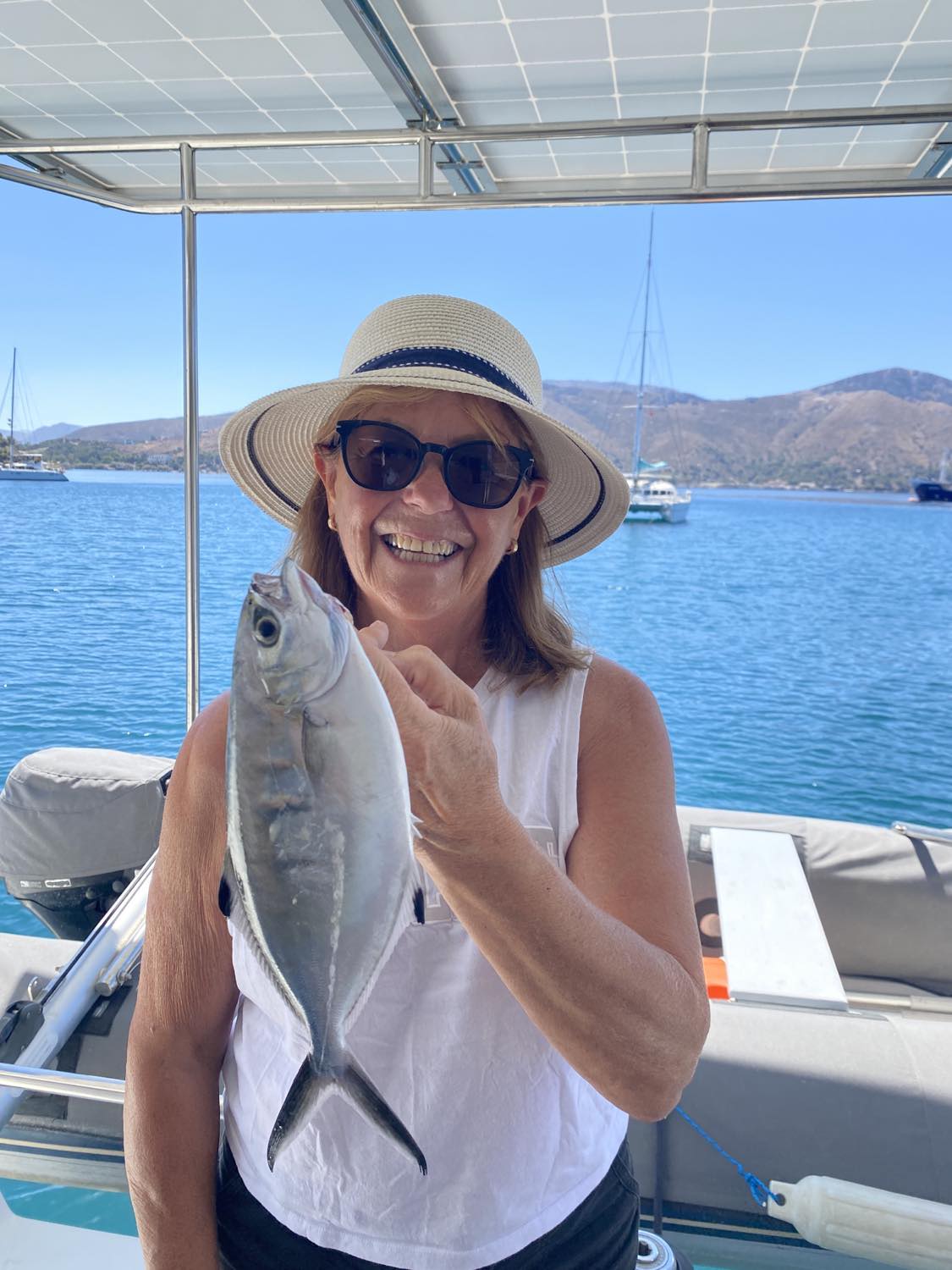
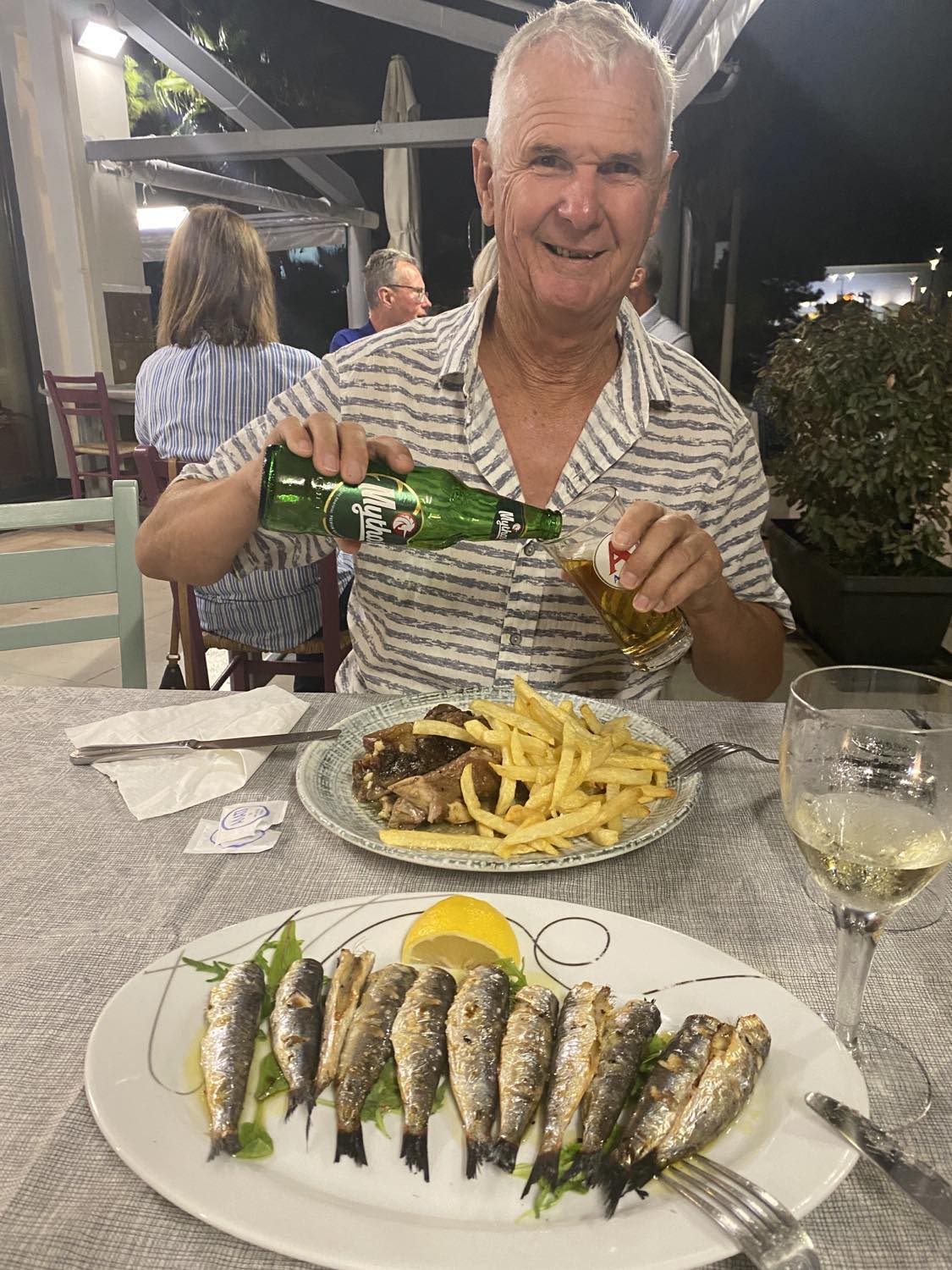
We made our way up some very precarious mountain roads to visit the castle, arriving just as the archaeological museum was closing. The curator kindly let us in and gave us a private tour. The displays were mostly religious relics with a rich history of persecution, invaders and occupation (including the Nazis during WWII).


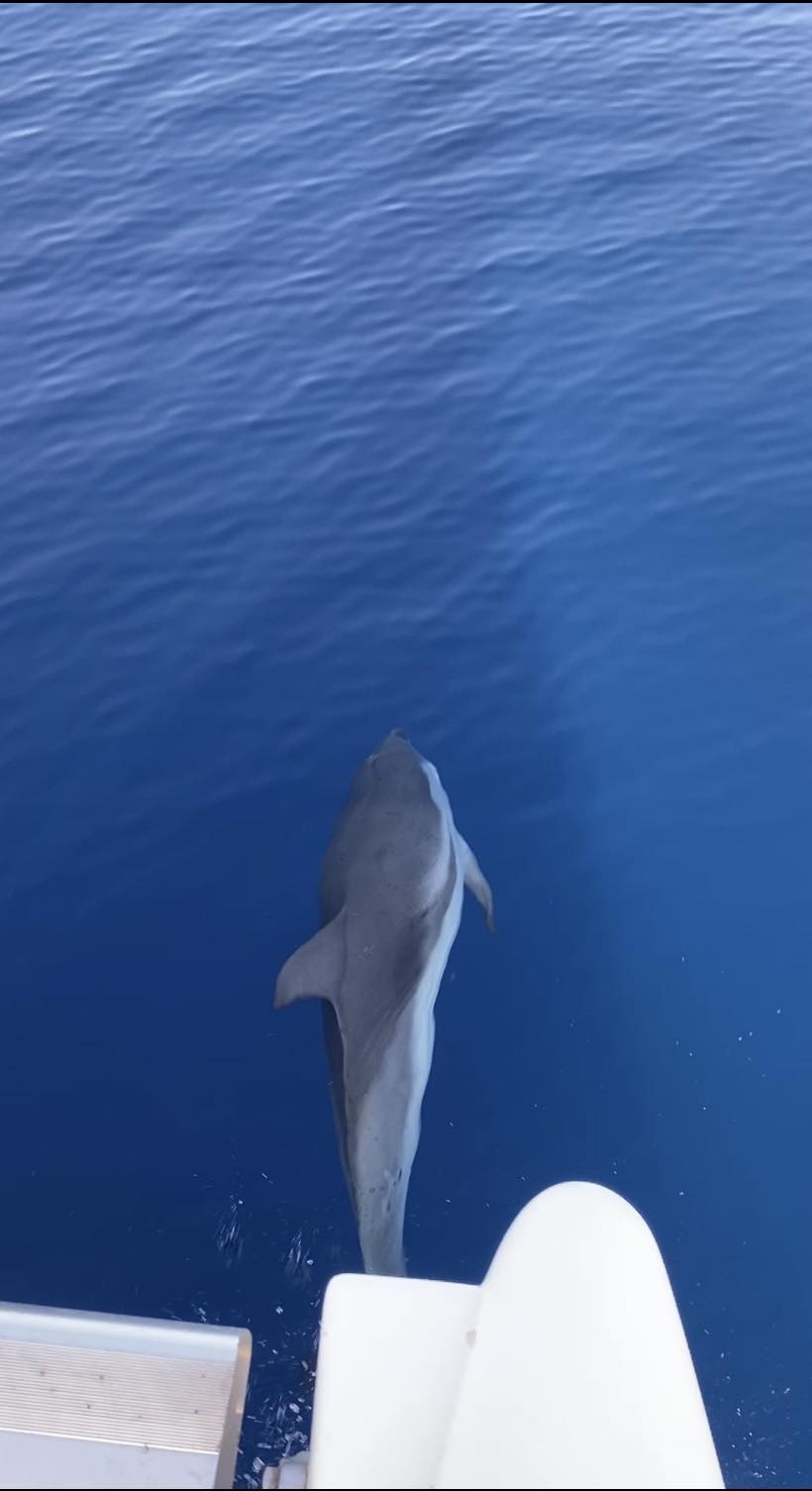
A break in the weather saw us make the dash across ‘windy alley’ from Leros to Naxos, a 10 hour journey of lumpy bumpy cold travel. The following day we arrived in the main harbour Parikia on Paros. Here we spent another week waiting for the next ‘weather window’ to make the jump from here, Paros, towards mainland Greece, via an overnight stop at Kythnos. My birthday happened to fall on another long day at sea but this stretch was a very pleasant day’s sail in kindly winds with fairly small waves – We also had a friendly pod of dolphins – thank you Poseidon! John cooked me a roast chicken birthday dinner on the way.


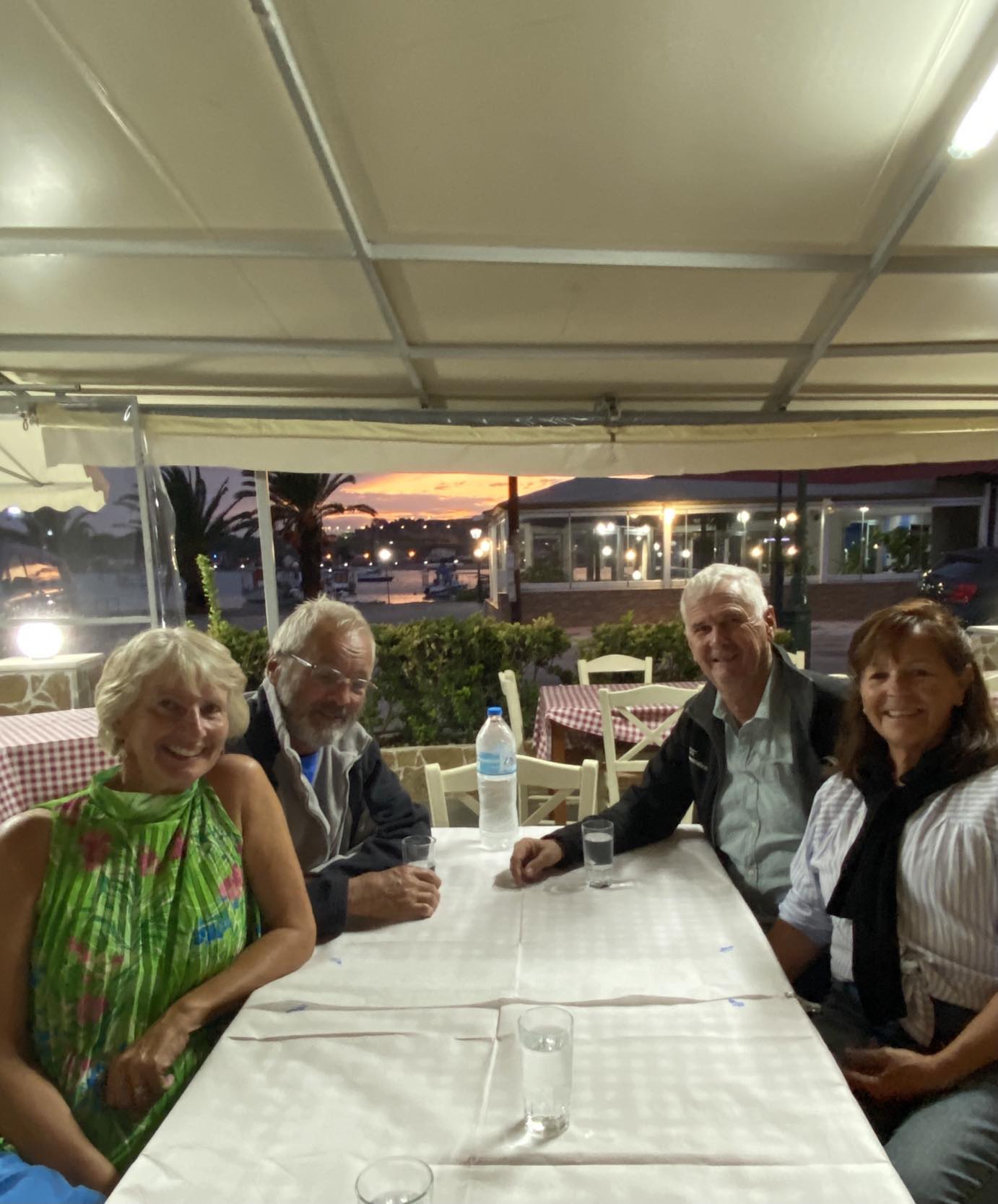
On arrival at Poros, just a short dinghy ride across the channel from mainland Greece at Galatas, we were reunited with our friends on, Vanilla, Russ and Cathie. They were entertaining friends arriving that evening by fast ferry from Athens and kindly invited us to join them for a meal at a lovely restaurant high on the hill. A pleasant evening in good company and a fitting end to our last few weeks of battling the seas to ensure we were within reach of our haulout destination and date of 29th September.
Interesting Greek driving norms :
Pedestrian crossings – giving way is optional. Pedestrians step off the kerb at their own risk
Parking is allowed- on any side of the road in any direction, wheels up on footpaths, at intersections, median strips even roundabouts. You may stop in a lane provided you put on your emergency flashers.
Motor bikes- may be ridden anywhere including footpaths if on a scooter. Helmets usually optional. Law states you must have a helmet on your person but not necessarily on your head- they carry the helmet in the crook of their arm! Lane splitting at 100kph is OK but you need to be on full throttle!
Open road (this was alarming) – overtaking anywhere including double lines. Often where double passing lanes you would be confronted with a lunatic Greek passing downhill totally across the double lines in your lane! Speed – they seem to read speed signs in mph instead of kmph so they are fast! Limited road warning signage on local roads but the toll highways are very good with low traffic volumes – they were apparently built by the Germans (another EU initiative). Roundabouts – require STOP signs at the entry points to have the chance that oncoming traffic is going to give way!
Driving is definitely an experience and gets your attention.
John

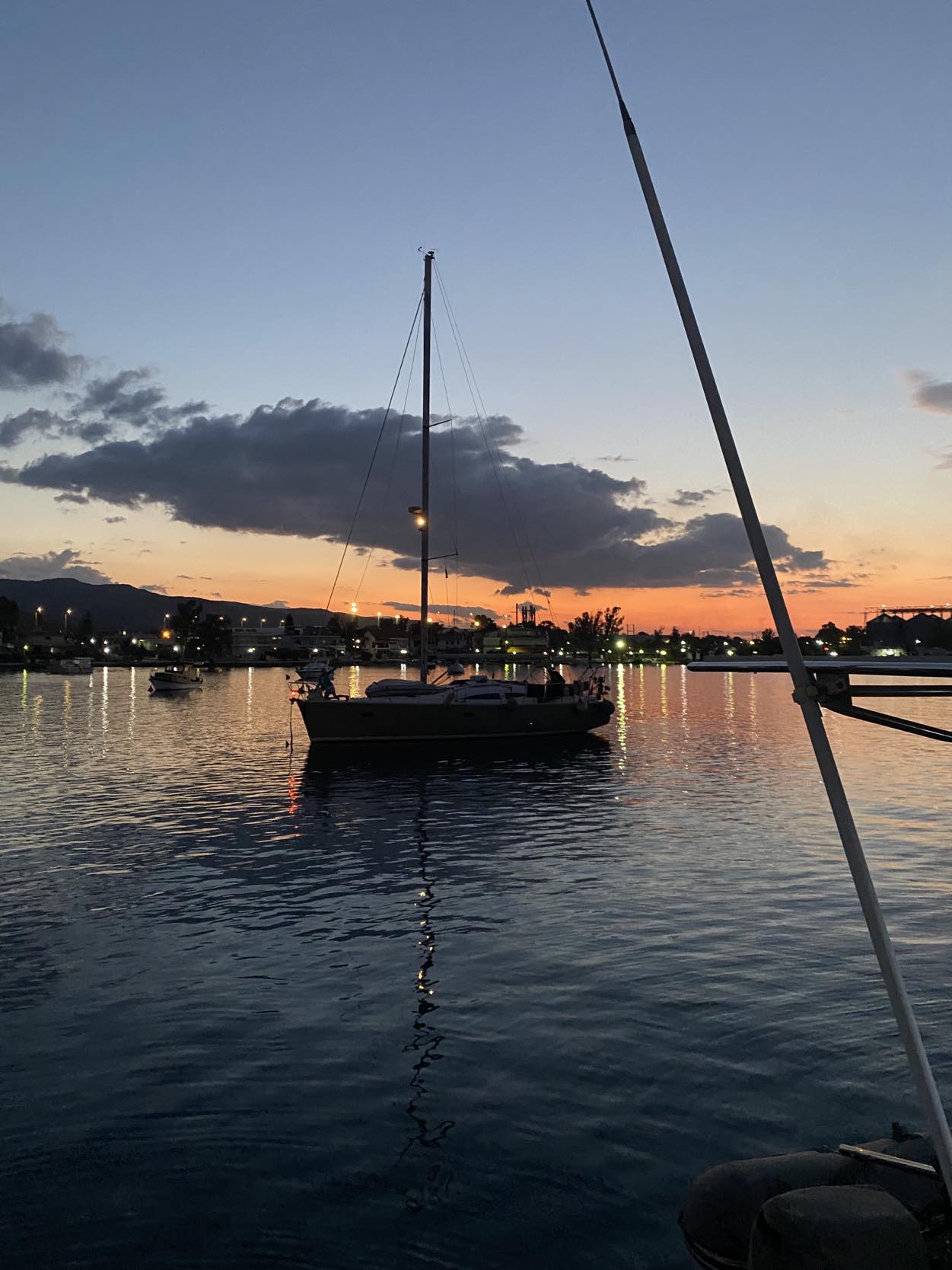
Back at Almira Boatyard we hauled out and were placed in our winter storage parking spot without incident. We ‘winterised’ Rukus in a record 4 days before heading on the long flight home to Sydney – planning can start for next season. Who knows where we will head in 2024 …
9 comments